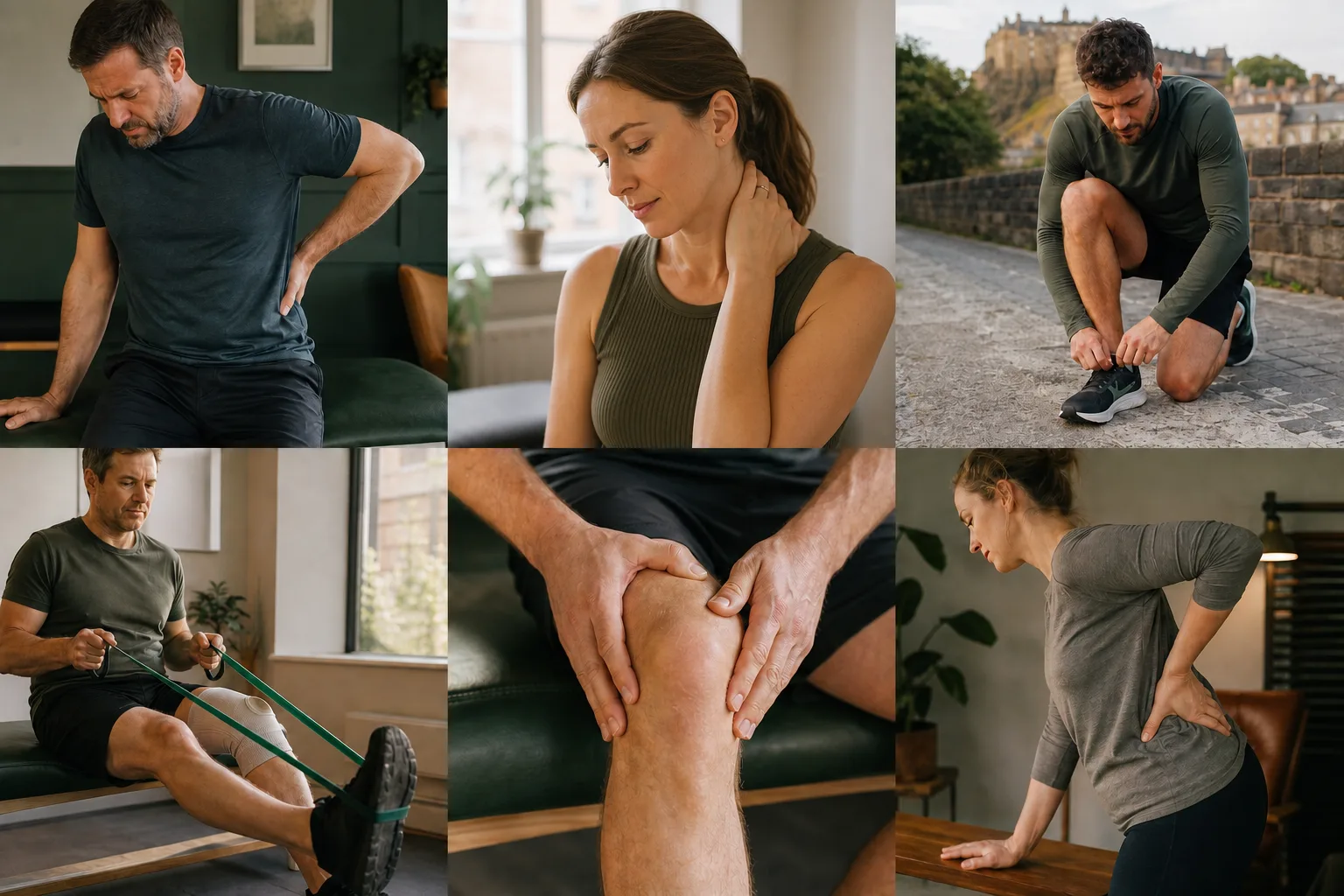
Choose the closest match. Your assessment will check the full picture rather than forcing symptoms into a label.
A useful diagnosis is more than a label. It should explain what you can do now, what needs rebuilding, and how we will know you are ready for more.
Your treatment options, fully explained.
Session numbers are planning guides. Your clinician will confirm an individual recommendation after assessment and review it as you progress.
Back pain
A practical route back to sitting, lifting, sleeping and moving with more confidence.
What it is
Back pain can feel like an ache, stiffness or sharper pain in the upper or lower back. It may arrive suddenly, build gradually or return in episodes. Often there is no single damaged structure responsible.
Common causes
A sudden change in activity
Reduced strength or general fitness
Long periods in one position
A previous flare-up or strain
How we treat it
We assess how your back moves, what loads it tolerates and which daily tasks matter most. Your plan can combine graded movement, strength work, hands-on treatment where useful, and clear advice for work, sleep and activity.
Neck & shoulder pain
For stiffness, headaches or pain that travels into the shoulder, upper back or arm.
What it is
Neck and shoulder pain can limit turning, reaching, desk work and sleep. Symptoms may stay local or travel into the upper back and arm, sometimes with tension-related headaches.
Common causes
A sprain, strain or sudden movement
Changes in work or training load
Staying in one position for too long
Poor sleep, fatigue or stress
How we treat it
We check neck, shoulder and nerve function, then build comfortable movement and strength. Treatment may include tailored exercise, manual therapy, pacing advice and practical changes to the positions or activities that aggravate symptoms.
Sports injury
Rehabilitation that prepares you for the demands of your sport—not only a pain-free clinic test.
What it is
Sports injuries include ligament sprains, muscle strains and tendon problems. They may happen in one clear moment or develop gradually when training demand exceeds what the body is ready for.
Common causes
A twist, impact or awkward landing
A rapid increase in training load
Repeated movement or overuse
Fatigue and incomplete recovery
How we treat it
We identify what has been irritated and what your sport requires. Rehabilitation progresses from symptom control and mobility to strength, balance, speed and sport-specific testing, with a clear return-to-training plan.
Post-surgery rehabilitation
A staged plan that connects hospital guidance with the movements you need in daily life.
What it is
After orthopaedic surgery, swelling, weakness, stiffness and temporary movement restrictions are common. Rehabilitation helps restore safe movement and function while protecting the healing repair.
Common causes
Normal post-operative swelling
Reduced movement and muscle capacity
Temporary walking or lifting restrictions
Loss of confidence using the area
How we treat it
We work within your surgeon’s protocol, monitor swelling and movement, and progress walking, strength and everyday tasks at the right pace. If recovery does not follow the expected course, we help you contact the appropriate surgical team.
Knee pain
Support for stairs, running, kneeling and the everyday movements your knee has started avoiding.
What it is
Knee pain may be felt around the kneecap, inside the joint or in nearby tendons. It can affect people of any age and does not automatically mean surgery or a scan is needed.
Common causes
A change in walking or training load
Reduced hip, thigh or calf strength
A ligament, tendon or meniscus injury
Osteoarthritis or joint irritation
How we treat it
We assess joint movement, strength and how the whole leg works during your problem task. Treatment centres on progressive exercise and load management, with taping or hands-on techniques used when they add value.
Sciatica
Clear guidance for nerve-related pain, tingling or numbness travelling from the back into the leg.
What it is
Sciatica describes symptoms caused when the sciatic nerve is irritated or compressed. Pain can travel through the buttock and leg and may come with tingling, numbness or weakness.
Common causes
A disc bulge or prolapse
Narrowing around the spinal nerves
One spinal bone slipping forward
A back injury or inflammatory flare
How we treat it
We screen nerve function and urgent warning signs, then help you keep moving with suitable positions and graded exercise. Manual therapy may be used alongside exercise, and we coordinate with your GP when medication or specialist review is needed.
Recovery, in their words.
“
I came in with back pain that had stopped me running. Six weeks later I was back on the trails — with a plan I understood.
Jamie R.Back pain
“
After my knee surgery, Sarah made every step feel manageable. I knew what to work on and why it mattered.
Sophie L.Post-surgery rehab
“
The neck pain had become part of my working day. The guidance was straightforward, and the difference has lasted.
Eilidh M.Neck pain
Clinical information, checked against trusted guidance.
This page supports—not replaces—an individual assessment. Treatment and recovery vary by diagnosis, health, goals and response.